
Key takeaways
- Our guide to best cyber monday sleeping pads deals compares air, foam, and self-inflating pads by thickness, weight, and warmth, so you can pick the right pad.
What's inside
As an Amazon Associate I earn from qualifying purchases. This post may contain affiliate links at no extra cost to you.
Our top picks at a glance
4 products from this guide, in the order reviewed below.



As an Amazon Associate we earn from qualifying purchases. Prices and availability can change.
A pad decides whether the ground feels like a bed or a slab of cold rock, and the wrong pad turns a good bag into a cold night. best cyber monday sleeping pads deals gathers seven pads, from a 13 oz air pad to a 4.25 in self-inflating pad, so the choice comes down to warmth, thickness, and weight. Each pad below lists its R-value and its size.
Quick verdict
The short answer is to match the warmth to the coldest night first, then the thickness and the weight. A pad that is light on paper but cold on the ground will feel wrong no matter how small it packs, so start with the nights on the calendar and work back to the pad.
Across the seven pads in this guide, the spread runs from a 13 oz air pad to a 4 lb 6 oz self-inflating pad, with R-values from 2.0 to 8.5. That spread matters, because warmth decides how cold the ground feels, thickness decides how well hips and shoulders rest, and weight decides how far the legs can walk. No single pad covers all three jobs at once, so the shortlist should start with the coldest night on the trip.
Warmth, thickness, and weight decide the fit. The comparison table below puts those traits side by side, so the trade-offs are easy to see before reading the full reviews. Read the warmth column first, then the thickness column, and shortlist the pads that match the trip.
If time is short, start with the table, note the warmth column, and shortlist the pads that match the trip. Then read the two or three reviews that match that warmth, check the limits, and choose the one whose size and valve are already right. That order keeps the choice simple and keeps the night warm.
| Product | Type | Best for | Key spec | Main limit |
|---|---|---|---|---|
| Therm-a-Rest NeoAir Xlite NXT Ultralight Camping and Backpacking Sleeping Pad | Air pad | light trail nights | 13 oz; R-value 4.5; 3 in thick | Air pads need inflation each night |
| Therm-a-Rest NeoAir XTherm NXT Ultralight Camping and Backpacking Sleeping Pad, Neptune, Regular | Air pad | cold trail nights | Triangular Core Matrix; WingLock | Maker does not state R-value or thickness |
| Nemo Equipment Tensor Extreme Conditions Sleeping Pad – Regular (72″x20″) – Black/Birch Bud/Citron | Insulated air pad | extreme cold nights | R-value 8.5; 3.5 in thick | Air pads need inflation each night |
| Therm-a-Rest LuxuryMap Self-Inflating Foam Camping Sleeping Pad, Regular – 20 x 72 Inches | Self-inflating foam pad | car camping comfort | R-value 6.0; 3 in thick; 3 lb 4 oz | 3 lb 4 oz; a car camping weight |
| Therm-a-Rest MondoKing 3D Self-Inflating Camping Sleeping Pad | Self-inflating foam pad | roomy car camping | R-value 7.0; 4.25 in thick; large | 4 lb 6 oz; the heaviest pad here |
| Therm-a-Rest RidgeRest Classic Camping and Backpacking Sleeping Pad, Charcoal | Closed-cell foam pad | simple trail nights | 14 oz; R-value 2.0; foam | R-value 2.0; a warm weather pad only |
| Klymit Static V Inflatable Sleeping Pad for Camping, Lightweight Hiking and Backpacking Air Bed | Air pad | light trail nights on a budget | 18.7 oz; 2.5 in thick; 250 lb limit | No stated R-value |
How we selected
This guide was built from maker listings on Amazon, with each pad checked against its listing for warmth, thickness, weight, and valve type. Only pads with a live Amazon listing and a clear set of specs made the shortlist, and each review below cites the specs from its own listing.
The pool for this family held 24 sleep gear items, and the seven pads in this guide were drawn from that pool with an overlap rule that keeps shared products low across the guides. Each pad was judged on fit for camp nights, clarity of the listing, and whether the included parts match the job. Pads with a clear R-value and a stated size ranked first, and pads with vague listings stayed out.
Numbers in the reviews come from the maker listings, and any trait the maker does not state is marked as not stated rather than filled in from habit. That keeps the guide honest about what is known and what still needs a check on the listing or in the maker manual before buying. R-values are maker figures, and cold sleepers should treat them as a guide, not a promise.
Use cases were weighed by how a person would actually use the pad on a camp night. The best-for column in the table reflects that plain logic, and the limits in each review say where the pad falls short.
Best cyber monday sleeping pads deals in this guide
The seven pads below cover the main shapes in this family, from ultralight air pads to thick self-inflating pads and simple foam. Each review gives the warmth, the thickness, the weight, and the limits, so a reader can compare like with like and spot the one that matches the trip and the nights ahead.
Read the warmth first, because warmth decides how cold the ground feels through the night. Once the warmth is right, the thickness and the weight decide between the pads in that range. Check the size as well, because a pad that does not fit the sleeper or the tent will sit unused no matter how good its specs look.
Therm-a-Rest NeoAir Xlite NXT Ultralight Camping and Backpacking Sleeping Pad
The Therm-a-Rest NeoAir Xlite NXT suits a hiker who wants a warm air pad at a weight that barely registers in the pack. The maker lists a 3 in thickness, an R-value of 4.5, and a regular size of 72 by 20 inches, at 13 oz, with a WingLock valve. That mix makes it the lightest pad in this guide.
The maker lists an air pad build, a 3 in thickness, an R-value of 4.5, a regular size of 72 by 20 inches, a 13 oz weight, and a WingLock valve, with a pump sack, a stuff sack, and a repair kit in the box. The R-value of 4.5 suits three-season nights, and the 3 in of air lifts the sleeper clear of roots and stones. The WingLock valve inflates fast and deflates faster, and the pump sack fills the pad without lung moisture.
An air pad needs inflation each night, and a puncture on the trail means a flat night unless the repair kit is at hand. The 20 inch width is standard, so broad sleepers should check the fit, and the pad needs a flat, clear spot under the tent. Keep the valve clean, and store the pad loosely rolled at home with the valve open.
Buy if a light, warm air pad is wanted for trail nights, and a 13 oz weight plus a pump sack are a plus. Skip if a pad that needs no inflation is wanted, or a wide pad is needed for broad shoulders.
Therm-a-Rest NeoAir XTherm NXT Ultralight Camping and Backpacking Sleeping Pad, Neptune, Regular
The Therm-a-Rest NeoAir XTherm NXT suits a cold sleeper who wants an ultralight air pad built for winter nights. The maker lists an ultralight air pad with a Triangular Core Matrix build and a WingLock valve, in a Neptune colorway and a regular size. That mix makes it a strong pick for cold trail nights.
The maker lists an ultralight air pad, a Triangular Core Matrix construction, a WingLock valve, a Neptune colorway, and a regular size. The Triangular Core Matrix build gives the pad its structure, and the WingLock valve inflates fast and deflates faster. The Neptune colorway is easy to spot in a dark tent, and the regular size fits most adults. The pad packs small for a winter bag, and the air chambers lift the sleeper clear of cold ground.
The listing details used here do not state an R-value or a thickness, so a buyer who needs those numbers should check the listing or the maker manual before buying. An air pad needs inflation each night, and a puncture on the trail means a flat night unless a repair kit is at hand. Check the size before buying.
Buy if an ultralight air pad is wanted for cold nights, and a fast valve plus a small pack size are a plus. Skip if a stated R-value is needed before buying, or a pad that needs no inflation is wanted.
Nemo Equipment Tensor Extreme Conditions Sleeping Pad – Regular (72″x20″) – Black/Birch Bud/Citron
The NEMO Tensor Extreme Conditions pad suits a winter camper who wants the warmest air pad in this guide. The maker lists an insulated air pad with a 3.5 in thickness, an R-value of 8.5, and a regular size of 72 by 20 inches, with a 20D nylon top and a 40D nylon bottom. That mix makes it a strong pick for extreme cold nights.
The maker lists an insulated air pad, a 3.5 in thickness, an R-value of 8.5, a regular size of 72 by 20 inches, a 20D nylon top, a 40D nylon bottom, a Laylow valve, and a Vortex pump sack. The R-value of 8.5 is the highest in this guide, and it suits snow camping and frozen ground. The 3.5 in of air lifts the sleeper clear of roots and stones, and the Laylow valve inflates fast.
An air pad needs inflation each night, and a puncture on the trail means a flat night unless a repair kit is at hand. The 20 inch width is standard, so broad sleepers should check the fit, and the pad needs a flat, clear spot under the tent. The high R-value suits cold nights, and warm sleepers may find it too warm for summer.
Buy if the warmest air pad is wanted for snow camping and frozen ground, and an R-value of 8.5 covers the coldest nights. Skip if a summer pad is wanted, or a pad that needs no inflation is needed.
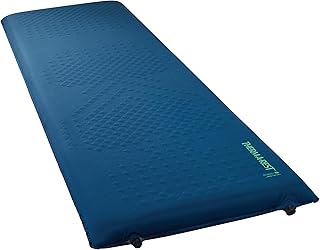
Therm-a-Rest LuxuryMap Self-Inflating Foam Camping Sleeping Pad, Regular – 20 x 72 Inches
The Therm-a-Rest LuxuryMap suits a car camper who wants a thick self-inflating pad with real warmth. The maker lists a self-inflating foam build with a 3 in thickness, an R-value of 6.0, and a regular size of 72 by 20 inches, at 3 lb 4 oz, with a TwinLock valve. That mix makes it a strong pick for comfortable car camping.
The maker lists a self-inflating foam build, a 3 in thickness, an R-value of 6.0, a regular size of 72 by 20 inches, a 3 lb 4 oz weight, and a TwinLock valve, with a stuff sack included. The foam core draws air in on its own, so setup is a matter of opening the valve and topping up with a few breaths. The R-value of 6.0 suits cold nights, and the 3 in of foam and air cushions hips and shoulders on hard ground.
At 3 lb 4 oz the LuxuryMap is a car camping weight, so long trail walks will feel the load, and the packed size is larger than an air pad. The 20 inch width is standard, so broad sleepers should check the fit. Store the pad loosely rolled at home with the valve open.
Buy if a thick self-inflating pad is wanted for car camping, and an R-value of 6.0 covers cold nights. Skip if a light trail pad is wanted, or the pack must stay small.
Therm-a-Rest MondoKing 3D Self-Inflating Camping Sleeping Pad
The Therm-a-Rest MondoKing 3D suits a camper who wants the thickest pad in this guide for roomy car camping. The maker lists a self-inflating build with a 4.25 in thickness, an R-value of 7.0, and a large size of 77 by 25 inches, at 4 lb 6 oz, with a TwinLock valve. That mix makes it a strong pick for tall and broad sleepers.
The maker lists a self-inflating build, a 4.25 in thickness, an R-value of 7.0, a large size of 77 by 25 inches, a 4 lb 6 oz weight, and a TwinLock valve, with a StrataCore construction. The thick foam and air core cushions hips and shoulders on hard ground, and the 25 inch width gives room to move. The R-value of 7.0 suits cold nights, and the StrataCore build keeps the foam stable under the sleeper.
At 4 lb 6 oz the MondoKing 3D is the heaviest pad in this guide, so it suits car camping and short walks, not long trail days. The packed size is large, and the pad needs a full unroll to inflate well. The large size needs a wide tent floor, so check the tent before buying. Store the pad loosely rolled at home with the valve open, and dry it fully before storage.
Buy if the thickest pad is wanted for car camping, and a large size plus an R-value of 7.0 are a plus. Skip if a light trail pad is wanted, or the tent floor is narrow.
Therm-a-Rest RidgeRest Classic Camping and Backpacking Sleeping Pad, Charcoal
The Therm-a-Rest RidgeRest Classic suits a hiker who wants a simple foam pad that cannot go flat. The maker lists a closed-cell foam build with an R-value of 2.0, a regular size of 72 by 20 inches, and a 14 oz weight, in cross-linked polyethylene. That mix makes it a strong pick for simple trail nights.
The maker lists a closed-cell foam build, an R-value of 2.0, a regular size of 72 by 20 inches, a 14 oz weight, and a cross-linked polyethylene build. The foam cannot puncture, so there is no valve, no pump, and no repair kit to carry. The pad doubles as a camp seat and a kneeling pad, and it straps to the outside of a pack without worry.
An R-value of 2.0 suits warm weather nights only, so cold ground will steal warmth all night, and the thin foam leaves hips and shoulders close to the ground. The 20 inch width is standard, so broad sleepers should check the fit, and the pad rolls into a long roll that needs pack straps. Pair it with an air pad for cold nights, or use it as a base layer under a warm pad.
Buy if a simple pad that cannot go flat is wanted, and a 14 oz weight plus zero setup are a plus. Skip if cold nights are planned, or a thick cushion is wanted.
Klymit Static V Inflatable Sleeping Pad for Camping, Lightweight Hiking and Backpacking Air Bed
The Klymit Static V suits a hiker who wants a light air pad with a roomy width at a trail friendly weight. The maker lists an inflatable air pad with a 2.5 in thickness, a size of 72 by 23 inches, and an 18.7 oz weight, with a 3 by 8 inch pack size and a 250 lb weight limit. That mix makes it a strong pick for light trail nights.
The maker lists an inflatable air pad, a 2.5 in thickness, a size of 72 by 23 inches, an 18.7 oz weight, a 3 by 8 inch pack size, a 75D polyester build, and a 250 lb weight limit. The V-shaped chambers cradle the sleeper and keep the pad stable through the night, and the 23 inch width gives more room than a standard pad.
The listing details used here do not state an R-value, so a buyer who needs a warmth number should check the listing or the maker manual before buying. An air pad needs inflation each night, and a puncture on the trail means a flat night unless a repair kit is at hand. The pad suits three-season nights, and cold sleepers should pair it with a foam pad for extra insulation. Keep the valve clean.
Buy if a light air pad with a wide cut is wanted for trail nights, and a small pack size is a plus. Skip if a stated R-value is needed before buying, or a pad that needs no inflation is wanted.
Buying guide
This buying guide walks through the four checks that matter most for sleeping pads: warmth and R-value, thickness and comfort, size and weight, and timing. Work through them in order, and the shortlist will shrink to one or two pads that fit the trip and the tent.
How to choose the best cyber monday sleeping pads deals
Warmth is the first check, so compare the R-value of each pad with the coldest night on the trip. A higher R-value means more insulation from cold ground, and a pad with an R-value of 4.5 suits three-season nights, while a pad with an R-value of 8.5 suits snow camping and frozen ground.
Cold ground steals warmth all night, so a warm bag on a cold pad will still feel cold. Pair the pad with the bag, and match the R-value to the same nights as the bag rating.
Match the thickness to the sleeper
Thickness decides how well hips and shoulders rest, so compare the stated thickness with the way the sleeper rests. A 3 in pad suits most sleepers, while a 4.25 in pad suits side sleepers and heavy sleepers, and a thin foam pad suits light sleepers on soft ground.
Side sleepers need more cushion than back sleepers, because hips and shoulders press harder into the pad. A pad that is too thin will let the sleeper feel the ground, and a pad that is too thick will feel wobbly.
Check the size, the weight, and the valve
Size and weight decide whether the pad fits the pack and the tent, so compare the stated size and weight with the trip. A regular pad measures 72 by 20 inches, while a large pad measures 77 by 25 inches, and a wide pad gives room to move at the cost of weight and pack space.
A WingLock valve inflates fast and deflates faster, while a TwinLock valve gives the same speed on a self-inflating pad, and a Laylow valve suits a wide air pad. Check the valve type in the listing, and look for a pump sack in the box, because a pump sack fills the pad without lung moisture.
Timing and the best cyber monday sleeping pads deals
The Cyber Monday sale is a useful time to compare listings side by side, and the price history of a listing shows how its tag has moved over time. Use that history to judge whether a listing is worth a closer look, and compare the specs at the same time so a low tag does not hide a poor fit.
Make a shortlist first, then check each listing in turn for warmth, thickness, and size. A pad that matches the coldest night is worth more than a pad that only looks thick on paper. Keep the shortlist small, because a long list makes the comparison harder, not easier.
FAQ
These questions cover the points that come up most often when choosing sleeping pads for trail nights, car camping, and cold mornings. Each answer gives a direct check to make before buying, so the choice stays grounded in the trip, the pad, and the listing.
What R-value do I need for a sleeping pad?
An R-value of 2.0 suits summer nights, an R-value of 4.5 suits three-season nights, and an R-value of 7.0 or more suits winter nights and snow camping. The right number depends on the coldest night, because cold ground steals warmth all night, so match the number to the trip.
A cold sleeper should pick a higher R-value than the calendar suggests, and a foam pad under an air pad adds warmth on very cold nights.
Are air pads or self-inflating pads better?
Air pads pack smaller and weigh less, while self-inflating pads set up with less effort and cushion well. The right type depends on the trip, because a long walk suits an air pad and a car camping trip suits a self-inflating pad, so match the type to the pack.
An air pad needs inflation each night and a repair kit on the trail, while a self-inflating pad draws air in on its own and tops up with a few breaths. Check the valve and the setup in the listing before buying.
How thick should a sleeping pad be?
A 3 in pad suits most sleepers, a 4.25 in pad suits side sleepers and heavy sleepers, and a thin foam pad suits light sleepers on soft ground. The right thickness depends on the sleeper, because hips and shoulders press harder than the rest of the body.
A pad that is too thin will let the sleeper feel roots and stones, while a pad that is too thick can feel wobbly.
Can a sleeping pad go flat on the trail?
An air pad can go flat if the fabric punctures, so carry the repair kit that comes in the box and clear the tent floor of sharp stones. A foam pad cannot go flat, and a self-inflating pad has foam inside that holds some cushion even with a slow leak.
Check the tent floor before setup, and keep the pad away from sharp rocks and pine needles. Store the pad loosely rolled at home with the valve open.
Conclusion
The right pad among the best cyber monday sleeping pads deals depends on the coldest night, the pack, and the sleeper. Pick the warmth and the thickness that match those three points, check the size and the valve, and the pad will serve the tent, the trail, and the long walk home well for many seasons to come.
Related guides
More from Amazon
Programs that pair well with the guide above. Offers and eligibility are set by Amazon and may change.
Send a Prime gift membership to someone who would use free shipping and Prime Video.
Gift Amazon PrimeGive audiobooks to someone who loves to listen. Plans and prices are set by Amazon.
Gift AudibleFree shipping on eligible items, Prime Video and more. Eligible new members can start with a free trial.
Start a Prime free trialA Prime membership for ages 18-24 with a trial period. Eligibility is set by Amazon.
See Prime for Young AdultsAs an Amazon Associate we earn from qualifying purchases.



Write Your Review
No reviews yet. Be the first to share your experience!